Workplace wellbeing
Digital Eye Strain at Work: A UAE Guide for HR Teams
2 November 2026 · 8 min read
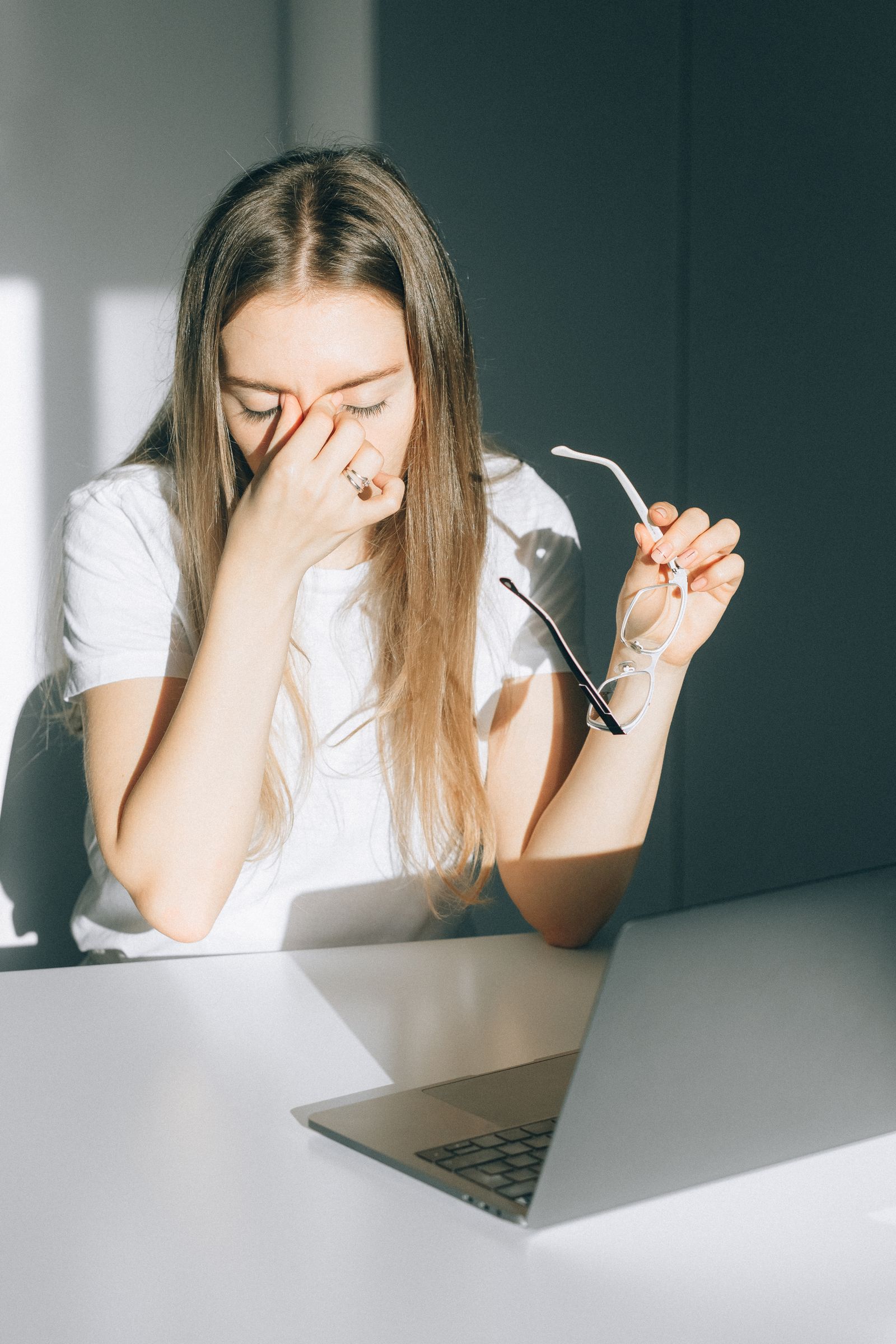
Look around any office in Dubai at four in the afternoon in November. Year-end reports open on one monitor, a video call on the other, a phone buzzing beside the keyboard. Somewhere in that room, someone is rubbing their eyes, squinting at a slide, or quietly reaching for eye drops. Nobody mentions it, because tired eyes feel like part of the job.
They should not be. Digital eye strain is one of the most common and least discussed occupational health issues in knowledge work. It is rarely dramatic, which is exactly why it slips under the radar of most corporate wellness plans. Yet it chips away at comfort, concentration and energy every single day, and much of it is preventable through decisions HR, facilities and managers already control.
Here is what HR and People teams in the UAE need to know, and what to do about it.
What digital eye strain actually is
The American Optometric Association (AOA) describes computer vision syndrome, also called digital eye strain, as a group of eye and vision problems linked to prolonged use of computers, tablets and phones. The discomfort tends to increase with the amount of screen time.
The usual symptoms are:
- Eye strain and tired eyes
- Headaches
- Blurred vision
- Dry eyes
- Neck and shoulder pain
According to the AOA, people who spend two or more continuous hours a day at a computer or digital device are at the greatest risk. For most office teams, that is not a risk group. It is everyone.
Why do screens tire the eyes more than paper? The AOA points to lower contrast, glare and reflections, and viewing distances and angles that differ from reading a page. Uncorrected vision problems, or glasses that were never designed for screen distance, add to the load. And the effect does not stop at the eyes: people lean in, crane their necks and hunch their shoulders to see better.
Symptoms are often temporary, but the AOA notes they can come back and get worse if the underlying causes are left unaddressed. Persistent or worsening symptoms are always a reason to see an optometrist or ophthalmologist, not something a manager or an HR team should try to assess.
How common it is, and why the UAE context matters
 Long, uninterrupted screen sessions are the norm for most office roles, not the exception.
A review published in BMJ Open Ophthalmology by researchers at Aston University estimated that the prevalence of digital eye strain is 50% or more among computer users. The same review highlights a simple mechanism behind much of the discomfort: we blink far less when we concentrate on a screen. In one study it cites, blink rate fell from around 18 blinks per minute to under 4 during screen work.
Closer to home, a 2026 study in Frontiers in Digital Health surveyed 463 university students in Ras Al Khaimah, the UAE workforce of the next few years. More than four in five used digital devices for at least four hours a day, and 34.1% for seven to nine hours. The most common complaints were headaches (43.8%), neck or back pain (38.2%), eye strain (37.6%) and dry eyes (37.1%). Almost half said they regularly used screens for more than three hours without a break, and those who rarely took breaks were more likely to report a diagnosed eye disorder. The authors note limits to the study, including self-reported data, but the pattern is hard to ignore.
The UAE adds two local factors.
Air conditioning and dry indoor air
Offices in the UAE are cooled for most of the year. In a Khaleej Times report from July 2026, UAE doctors warned that prolonged exposure to cold, dry air from air conditioning can contribute to dry and irritated eyes, alongside headaches and fatigue. Their practical advice included keeping indoor temperatures around 23 to 25°C and avoiding sitting directly under vents.
Winter is not a break for the eyes
Cooler months do not automatically bring relief. In a Khaleej Times report on winter eye problems, UAE ophthalmologists described an increase in dry eye complaints, linking it to longer screen time and dry indoor air, and advised against sitting in rooms with strong air conditioning and a fan blowing at the same time. Add the year-end rush of reports, reviews and planning decks, and November to January can be some of the most screen-intensive weeks of the year.
The business case: comfort, focus and output
Tired eyes rarely show up in absence reports. Their cost is quieter: discomfort, headaches and a mid-afternoon slump that people tend to blame on themselves.
The Aston University review gathers evidence that vision matters for performance. It reports that uncorrected astigmatism can sharply increase errors on screen tasks, and that correcting even small refractive errors in younger office workers was estimated to raise productivity by at least 2.5%. On a global scale, the World Health Organization estimates that at least 2.2 billion people have a near or distance vision impairment, that almost half of these cases could have been prevented or have yet to be addressed, and that vision impairment costs around US$411 billion a year in lost productivity.
Many employees simply do not know their vision has changed. The WHO identifies presbyopia, the age-related loss of near focus, as the leading cause of near vision impairment, affecting 826 million people. In a multigenerational UAE workforce, a meaningful share of your team is likely reading small text on a laptop with eyes that would benefit from a professional check.
There is also a legal and cultural angle. UAE employment rules require employers to provide a safe and appropriate work environment, and Ministerial Resolution No. 44 of 2022 asks employers to protect workers from the risks of occupational injuries and diseases, including through training and awareness. Screen work is not usually the first thing that comes to mind, but a thoughtful approach to it signals that wellbeing covers the everyday, not only the extraordinary.
What companies can do
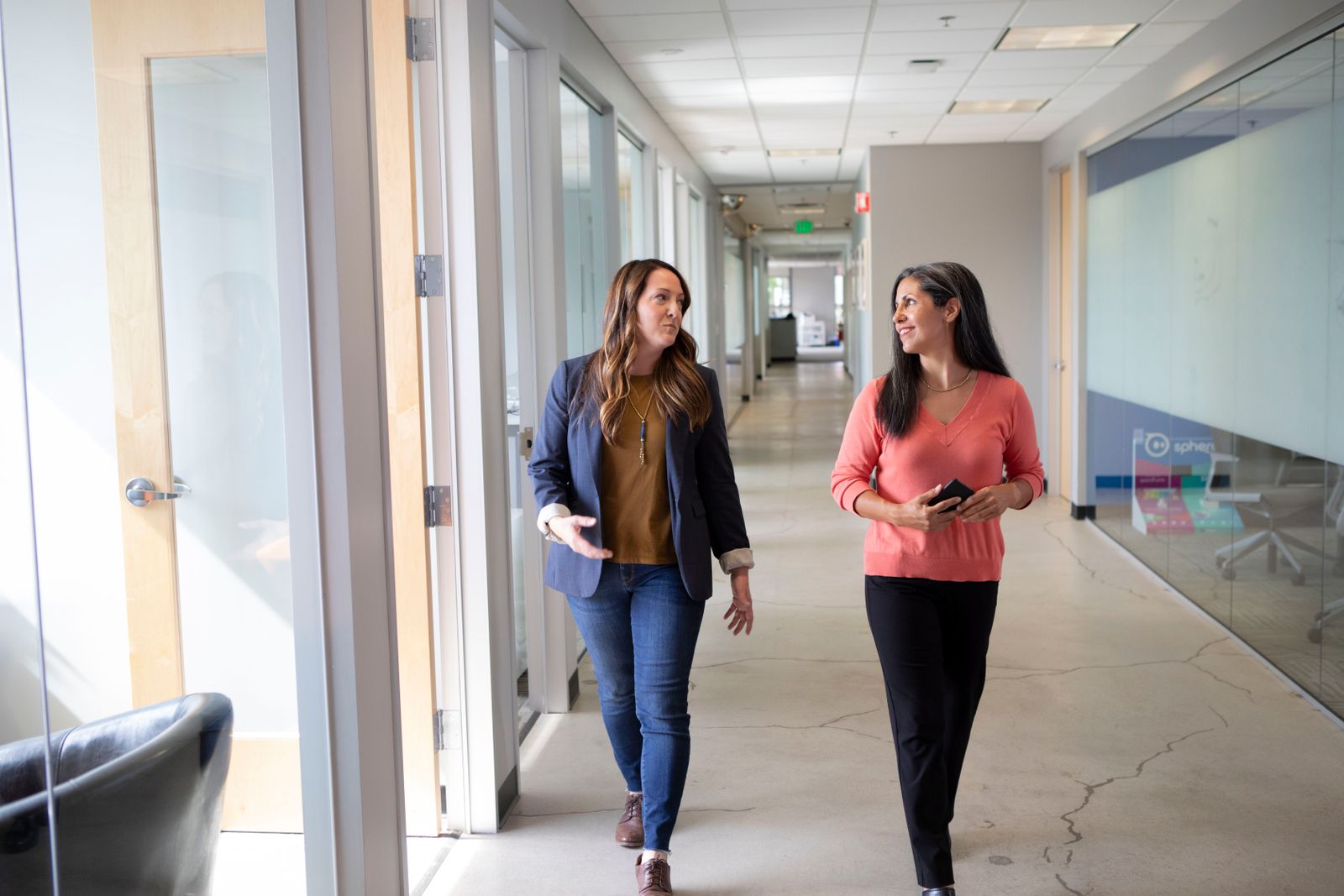
 Breaks that move the eyes away from screens are one of the simplest and most effective protections.
The good news: most of the solutions are organisational, inexpensive and quick to roll out.
1. Make micro-breaks part of how work is designed
The AOA and Canada's occupational health agency CCOHS both recommend the 20-20-20 rule: every 20 minutes, look at something about 20 feet (6 metres) away for 20 seconds. The AOA also suggests resting the eyes for 15 minutes after two hours of continuous screen use. Rules only work if the culture allows them, so build them into the day: no back-to-back video calls, meetings that end five minutes early, walking one-to-ones. When managers take visible screen breaks themselves, others feel allowed to follow.
2. Fix glare and screen position
CCOHS advises placing monitors parallel to overhead lights rather than directly beneath them, angling screens away from windows, and using adjustable blinds, controlling glare through lighting and placement before reaching for anti-glare filters. The AOA recommends a screen roughly 50 to 70 cm from the eyes, with its centre slightly below eye level. A short ergonomics session where people adjust their own desks fixes a lot in one afternoon.
3. Manage the indoor climate
Review thermostat settings and desk positions under vents, in line with the 23 to 25°C range suggested by the doctors quoted in Khaleej Times. Encourage water bottles at desks and regular movement away from cold air streams.
4. Make professional eye care easy to access
The AOA recommends a comprehensive eye exam every year for screen users, and CCOHS suggests checks every one to two years, telling the examiner about the job. Check what your health insurance covers, communicate it clearly, and consider on-site vision screening run by licensed providers. Anyone with persistent symptoms should be encouraged to see an eye care professional. One thing to skip: a 2023 Cochrane review of 17 randomised controlled trials concluded that blue-light filtering lenses "probably make no difference to eye strain" in the short term.
5. Teach the habits, then keep reinforcing them
A single email will not change behaviour. Short, practical sessions that combine eye breaks, posture, stretching and stress management work better, especially when they come back regularly through the year. Movement-based formats such as desk yoga or pilates help with neck and shoulder tension too, and relaxation techniques give people a reason to look away from the screen and breathe.
The bottom line
Digital eye strain will not appear in your absence data, and it rarely makes it into engagement surveys. But it shapes how your people feel at 4 pm every day, how carefully they read the contract, how clearly they think in the last meeting of the week. Treating eye comfort as part of workplace wellbeing is a small, concrete way to show employees that their everyday experience matters, all year round, not only on awareness days.
Building your 2027 wellbeing calendar? Safe to Grow designs year-round corporate wellbeing programs for companies in Dubai and across the UAE, including movement sessions at the office, pilates and yoga, stress management workshops and sophrology, spread across the year in packs of 3, 6 or 12 workshops. Talk to our team about a programme that helps your people work well, screen after screen.
Sources
- American Optometric Association: Computer vision syndrome (digital eye strain)
- Sheppard and Wolffsohn, BMJ Open Ophthalmology: Digital eye strain, prevalence, measurement and amelioration (Aston University repository)
- Frontiers in Digital Health (2026): Digital eye health and behavioral determinants of screen use among university students in the UAE
- World Health Organization: Vision impairment and blindness (fact sheet)
- CCOHS: Office ergonomics, eye discomfort in the office
- Optometry Today (AOP): Cochrane review on blue light filtering spectacles published
- Khaleej Times: Cold, dry air and poor AC maintenance can trigger health issues, UAE doctors warn
- Khaleej Times: UAE doctors warn of increase in eye problems, strain during winter
- UAE Government portal (u.ae): Health and safety at the workplace
Photos: Nataliya Vaitkevich (cover), Thirdman and Mikhail Nilov on Pexels.
Sources
- https://www.aoa.org/healthy-eyes/eye-and-vision-conditions/computer-vision-syndrome
- https://publications.aston.ac.uk/id/eprint/33444/1/e000146.full.pdf
- https://www.frontiersin.org/journals/digital-health/articles/10.3389/fdgth.2026.1719475/full
- https://www.who.int/news-room/fact-sheets/detail/blindness-and-visual-impairment
- https://www.ccohs.ca/oshanswers/ergonomics/office/eye_discomfort.html
- https://www.aop.org.uk/ot/news/2023/08/18/cochrane-review-on-blue-light-filtering-spectacles-published
- https://www.khaleejtimes.com/lifestyle/health/uae-cold-dry-air-poor-ac-maintenance-eye-irritation-asthma-respiratory-issues
- https://www.khaleejtimes.com/uae/uae-doctors-warn-of-increase-in-eye-problems-strain-during-winter
- https://u.ae/en/information-and-services/jobs/Workplace-regulations/health-and-safety-at-workplace
Ready to invest in your people?
Get a quote →