Corporate training
Leadership Training in Dubai: Support Your Managers First
19 October 2026 · 7 min read

Every HR leader knows the saying that people leave managers, not companies. What gets talked about far less is what is happening to the managers themselves. According to Gallup's State of the Global Workplace 2026 report, manager engagement dropped from 27% in 2024 to 22% in 2025. Since 2022 it has fallen nine points, the steepest decline of any group of workers. Individual contributors sit at 19%, so the gap that used to separate managers from their teams has almost disappeared.
That matters, because managers are the lever through which almost everything else in a company moves. Gallup's research finds that managers account for 70% of the variance in team engagement. When the people in the middle are depleted, the strategy, the culture programme and the wellbeing calendar all lose their transmission belt.
For companies in Dubai and across the UAE, the picture is more encouraging than the global average, but it is not a reason to relax. This article looks at what the latest data says about managers, why "leadership training" often misses the point, and how to build development that actually supports the people who lead your teams.
The squeezed middle: what the numbers say about managers
Managers carry pressure from both directions. They translate goals from above, absorb concerns from below, and are increasingly asked to coach, retain, include and upskill, often while still delivering their own work.
Gallup's analysis of its 2025 World Poll data, published in April 2026, shows what that does to daily life. Managers were more likely than individual contributors to say they had experienced a lot of stress the previous day (45% versus 39%). Senior leaders reported stress at 46%, and were also more likely than individual contributors to report anger, sadness and loneliness, with loneliness at 31% for leaders compared with 21% for individual contributors. Gallup sums it up neatly: leaders have better lives, but worse days.
There is a second, quieter problem: preparation. According to Gallup, only 44% of managers worldwide have ever received any management training. The Chartered Management Institute (CMI) goes further, estimating that more than 80% of people in management roles are "accidental managers", promoted for being good at their job and never formally trained to lead others. CMI also reports that 82% of employees who quit believed a better manager could have kept them.
Put those figures together and a pattern appears. Companies promote their best performers, give them a team, rarely train them, then expect them to protect everyone else's engagement and wellbeing while their own is eroding.
 Regular, well-run one-to-ones are one of the first skills worth building in new managers.
The UAE context: a strong base worth protecting
The good news for UAE employers is that the starting point is strong. In Gallup's country-level data for the UAE (three-year averages ending 2025), 27% of employees are engaged, compared with 20% globally and 14% across the Middle East and North Africa. 55% of UAE employees are thriving in their overall lives, well above the global figure of 34%, and daily stress is reported by 33%, below the global average of 40%.
The same data contains a warning, though. 76% of UAE employees say now is a good time to find a job, compared with 52% globally. In a market where people feel they have options, the quality of everyday management becomes a retention strategy in its own right.
Employees also say clearly that development matters to them. HP's 2026 Work Relationship Index, the first edition with UAE-specific findings, reports that more than eight in ten UAE knowledge workers in every generation (82% of Gen Z, 87% of Millennials and 84% of Gen X) say their company's investment in their development makes them feel more secure. The same study found that 67% believe they may need to significantly pivot their career within a few years. Someone has to help them navigate that, and in most companies that someone is their line manager.
Why most leadership training misses the mark
When companies do invest in managers, the format often works against them. A few common traps:
Training as an event, not a habit
A two-day leadership seminar can be inspiring, but new skills fade quickly if nothing reinforces them once managers are back in their inbox. Coaching, feedback and difficult conversations are learned through repetition, not a single session.
Skills without self-care
Most programmes teach managers how to look after their teams and say very little about how managers look after themselves. Gallup's own guidance argues that improving workplace mental health starts with the mental health of managers. A manager running on empty cannot model healthy boundaries for anyone else.
Generic content for a very specific workforce
UAE teams are among the most multicultural in the world. Giving feedback, disagreeing in a meeting or raising a concern can mean very different things depending on someone's background, language and expectations. Off-the-shelf content built for one culture rarely prepares managers for teams that span many.
Mental health left to HR alone
The World Health Organization (WHO) recommends manager training for mental health, so that managers can recognise and respond to team members experiencing emotional distress, and build skills such as open communication and active listening. Many organisations still treat this as a specialist HR topic rather than a core management skill. This kind of training is about noticing and signposting, never diagnosing: managers should know when and how to point people towards qualified professionals.
What good manager development looks like
Gallup's research shows what is possible when development is done well. Managers who completed a strengths-based development programme saw up to 18% higher team engagement and 21% to 28% lower turnover compared with their peers. In the best-practice organisations Gallup studies, 79% of managers were engaged in 2025, against 22% globally. The gap is not destiny; it is design.
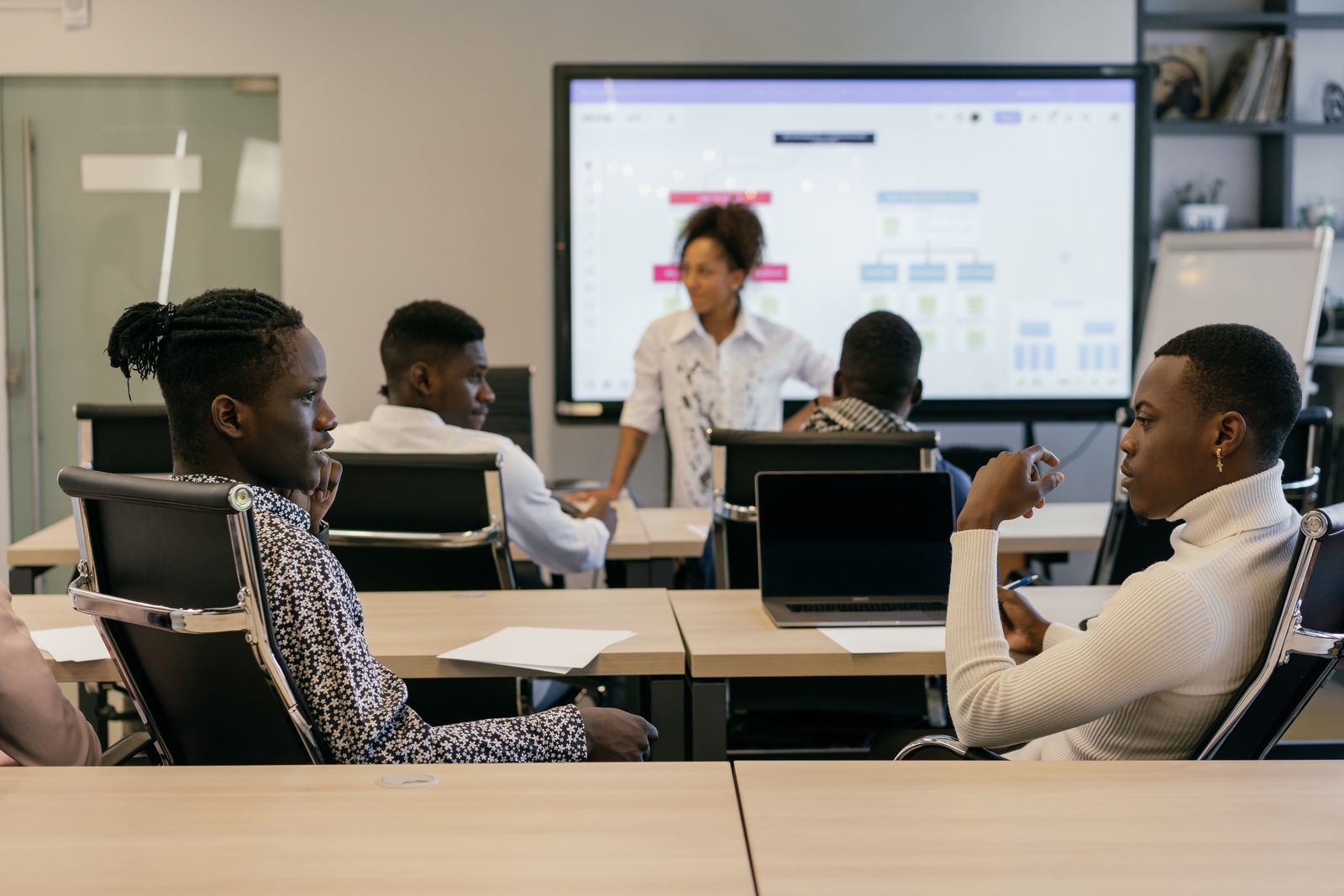
 Leadership development lands best when it reflects the real, multicultural teams managers lead every day.
What companies can do
Here are practical steps HR and People & Culture teams in the UAE can take in the coming months:
- Ask your managers how they are doing, separately. Most engagement surveys report results by team. Look at managers as their own group, including workload, stress and how supported they feel. You cannot fix what you do not measure.
- Train before, not after, promotion. Give high-potential employees the basics of leading people (one-to-ones, feedback, delegation, setting expectations) before they inherit a team, not six months after things go wrong.
- Spread learning across the year. Short, regular sessions with time to practise in between beat one intensive programme. Pair them with peer groups where managers can share real situations.
- Make communication skills central. Frameworks such as nonviolent communication give managers concrete language for tense conversations, and help them listen without immediately fixing or judging.
- Include the manager's own wellbeing. Stress management, boundaries and recovery should be part of leadership training, not an optional extra. Talking circles facilitated by a psychologist can give managers a safe, confidential space to decompress.
- Build mental health awareness into the curriculum. In line with WHO guidance, help managers recognise signs of distress, respond with care and refer to professional support, without ever stepping into a clinical role.
- Reduce the admin load. Gallup suggests managers need more time for coaching conversations and less administrative work. Review which reports, approvals and meetings could be simplified.
- Design for multicultural and neurodiverse teams. Make sure training reflects how feedback, hierarchy and communication styles differ across the cultures in your workforce, and how to adapt for neurodivergent colleagues.
Conclusion
Managers are the multiplier in any organisation: when they are well prepared and well supported, engagement and wellbeing spread through their teams. When they are exhausted and untrained, even the best HR initiatives struggle to land. UAE companies start from a stronger position than most, which is exactly why now is the moment to invest in the people in the middle. Culture changes people, and in most companies, the culture people actually experience is shaped by their manager.
Build leadership programmes your managers will actually use
At Safe to Grow, we design custom training programmes for companies in Dubai and across the UAE, covering leadership, communication, stress management and neurodiversity inclusion, shaped around your teams and your culture. They pair naturally with our corporate wellbeing sessions, so managers get skills and support all year round. Get in touch with our team to talk about what your managers need next.
Sources
- Gallup, "Global Employee Engagement Continues Decline" (State of the Global Workplace 2026)
- Gallup, "Leaders Have Better Lives but Worse Days"
- Gallup, "How Managers Impact Team Productivity"
- Gallup, "Engage Your Workforce by Empowering Your Managers First"
- Gallup, State of the Global Workplace, United Arab Emirates country-level data
- World Health Organization, "Mental health at work" fact sheet
- Chartered Management Institute, "The Emirati Edge: Forging a New Leadership Paradigm"
- HP Work Relationship Index 2026, UAE findings (via Channel Post MEA)
Photos: Vitaly Gariev on Unsplash (cover), Resume Genius and Ron Lach on Pexels.
Sources
- https://www.gallup.com/workplace/708071/global-employee-engagement-continues-decline.aspx
- https://www.gallup.com/workplace/708332/leaders-better-lives-worse-days.aspx
- https://www.gallup.com/workplace/713033/managers-and-team-productivity.aspx
- https://www.gallup.com/workplace/645398/engage-workforce-empowering-managers-first.aspx
- https://www.gallup.com/workplace/707522/state-global-workplace-united-arab-emirates-country-level-data.aspx
- https://www.who.int/news-room/fact-sheets/detail/mental-health-at-work
- https://www.managers.org.uk/knowledge-and-insights/research/the-emirati-edge-forging-a-new-leadership-paradigm/
- https://channelpostmea.com/2026/10/01/hp-work-relationship-index-finds-uae-workers-embracing-ai-and-new-skills-amid-change/
Ready to invest in your people?
Get a quote →